
School Assessment and Pupil Premium/Catch up Premium
Please find below important documents and information about our school.
Please note that due to Covid-19, we have no published data for the academic years 2019-2020 and 2020-2021.
2022-2023 End of Year Assessment
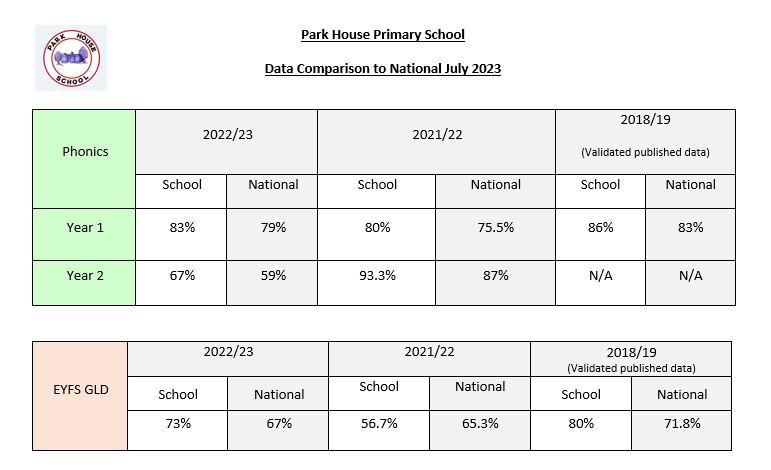
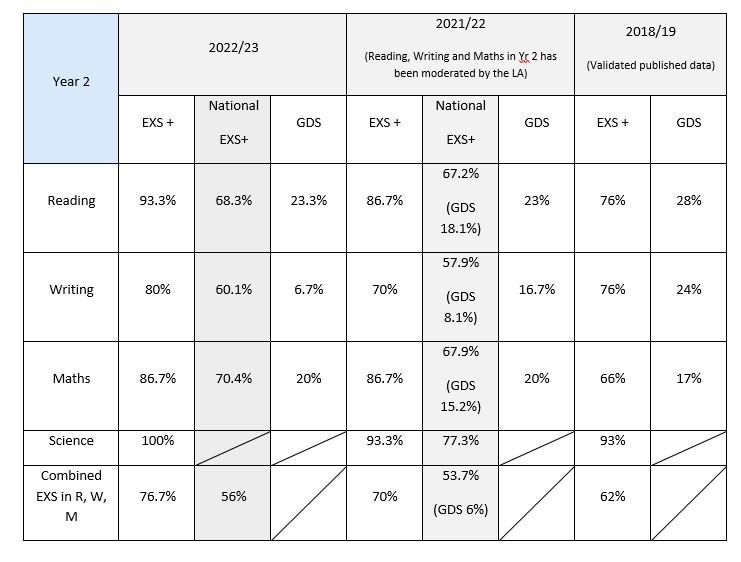
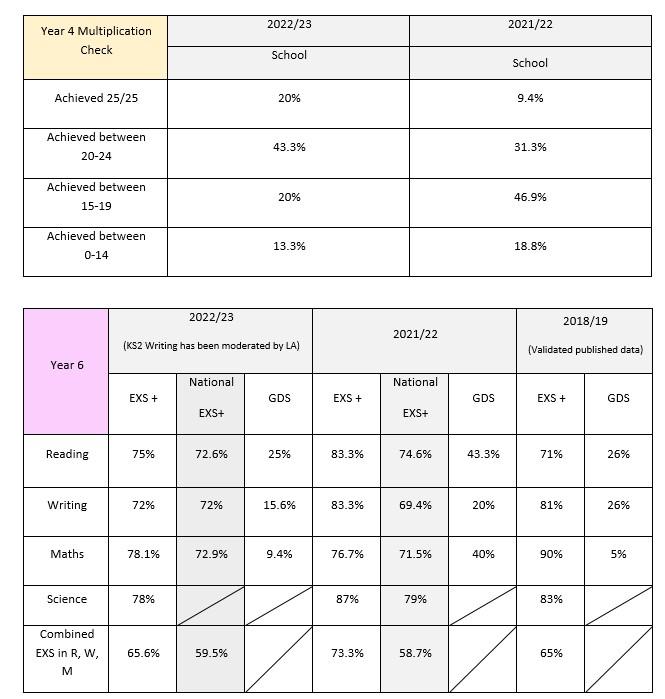
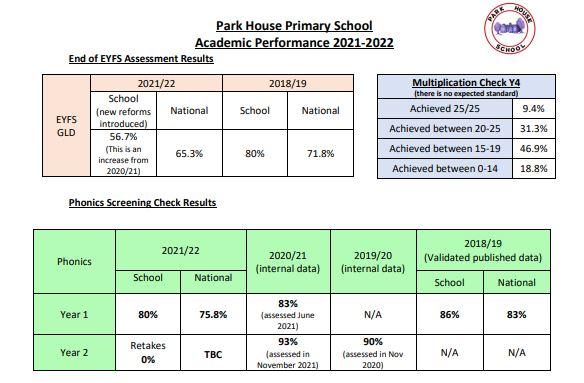
2021-2022 End of Year Data
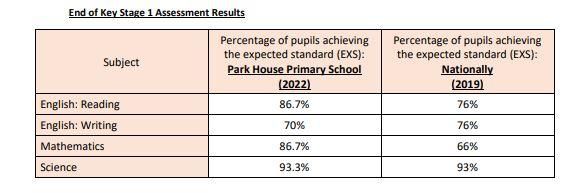
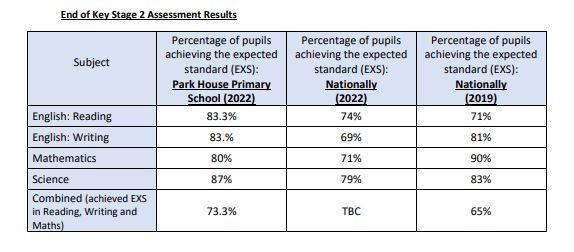

What catch-up funding is for.
The government announced £1 billion of funding to support children and young people to catch up lost time after school closure. This is especially important for the most vulnerable and disadvantaged backgrounds. This funding includes:
- a one-off universal £650 million catch up premium for the 2020 to 2021 academic year to ensure that schools have the support they need to help all pupils make up for lost teaching time
- a £350 million National Tutoring Programme to provide additional, targeted support for those children and young people who need the most help, which includes:
- a schools programme for 5 to 16-year-olds – for more information, see the National Tutoring Programme FAQs
- a 16 to 19 tuition fund
- an oral language intervention programme for reception-aged children
Funding allocations.
School allocations will be calculated on a per pupil basis.
Mainstream school will get £80 for each pupil in from reception to year 11 inclusive.
Using catch-up funding.
Schools should use this funding for specific activities to support their pupils to catch up for lost teaching over the previous months, in line with the curriculum expectations for the next academic year in actions for schools during the coronavirus outbreak.
While schools can use their funding in a way that suits their cohort and circumstances, they are expected to use this funding for specific activities which will help pupils catch up on missed education.

What is it?
The pupil premium is funding allocated to schools for the specific purpose of boosting the attainment of pupils from low-income families. Funding is based on children who have registered for a free school meal at any point in the last 6 years, children that are in care or adopted and children whose parents are currently serving in the armed forces.
Why has it been introduced?
The Government believes that the Pupil Premium, which is additional to main school funding, is the best way to address the current underlying inequalities between disadvantaged children and their peers by ensuring that funding to tackle disadvantage reaches the pupils who need it most. Whilst schools are free to spend the Pupil Premium as they see fit we are required to publish this online.
For the academic year September 2020-21 our school received £34,389 of Pupil Premium funding. From April 2019 to March 2020 we received £29,980. The percentage of our pupils known to be eligible for free school meals is: 6.5%. The national percentage is 17.3% (Primary). We are therefore below National average, this is because with the introduction of Universal Free School Meals has meant many parents do not feel the need to nor wish to apply.
This year we plan to use the Pupil Premium as follows:
- To continue to employ extra support staff to support children’s learning. We have a highly skilled teaching assistant workforce.
- Additional learning mentor time.
- Subsidised breakfast club places (this will be part funded by the Members’ Community Leadership Scheme)
- Provide intervention programmes including Nessy, Lexia, and Speech and Language Link.
Please click on our report below to find out more.
Changes to Curriculum Levels
The Department for Education (DfE) has decided that the children who are currently in Years 2 and 6 will be the last pupils to be awarded a level in their end of Key Stage tests (Summer 2015).
So why are levels disappearing?
The DfE want to avoid what has been termed ‘The level Race’ where children have moved through the old National Curriculum levels quickly to achieve higher attainment. The old National Curriculum was sub-divided into levels, but these were not linked to their national curriculum year group. For example, a child in Year 4 could be a Level 3 or even a level 5. Children were achieving Level 5 and 6 at the end of Key Stage 2, but the DfE thought that a significant number were able to achieve a Level 5 or 6 in a test—but were not secure at that level. The feeling from the DfE was that the old national curriculum and the levels system failed to adequately ensure that children had a breadth and depth of knowledge at each national curriculum level.
Assessing without Levels
The DfE announced last year that there would no longer be National Curriculum levels and that schools would have to set up their own way of assessing pupils. We have spent a long time researching various different methods of assessing and tracking pupils and almost all of the systems used the same format, which was similar to the system used in the Early Years and Foundation Stage. This was to take the end of year expectations for each year group and to split this into 3 categories as follows:
- Emerging— Yet to be secure in the end of year expectations.
- Expected—Secure in the majority of the end of year expectations.
- Exceeding—Secure in almost all or all the end of year expectations and is able to use and apply their knowledge and skills confidently.
Under the old levels system children who were exceeding might have moved into the next level. The DfE now want children who are in the exceeding bracket to add more depth and breadth to their knowledge, and to have more opportunities to develop their using and applying skills. They are calling this phase of learning Mastery and Depth. Only exceptional children will move into working towards the end of year expectations from the year above. Similarly, children who are unlikely to be emerging at the end of the year may work towards the expectations from the year below.
Early Years Foundation Stage (EYFS)
Children in the EYFS will continue to be assessed against the Early Years Foundation Stage Profile (EYFSP for short). This consists of Early Learning Goals for Reception aged learners, we are using Development Matters as a basis for ensuring our curriculum is broad and balanced. At the end of Reception these are reported as Emerging or Expected for the Early Learning Goals in each area. We collate evidence across the year to create ‘Learning Journeys’ for all children in EYFS and we value all contributions from parents and carers to these documents. We use observations, samples of learning, conversations and photographs of your child to evidence their understanding of key concepts and their characteristics of learning. From September 2021, we undertake the statutory Reception Baseline Assessment (RBA), schools are not given scores but a narrative to support their own baseline assessments.
So how will this look at the end of Year 6?
It is anticipated that the majority of children will reach the assessment point of Year 2 and Year 6 expected, a smaller number of children will reach Year 2 and Year 6 exceeding, and a small number will be Year 2 and Year 6 emerging, or possibly the year below exceeding/expected/emerging. We are using Cornerstones as a base to our curriculum and this feeds nicely into our tracking system. Here we continue to track your child's progress and attainment, this will be reported to you through parent consultations, interim report and the end of year report.